
Can’t get enough Sony tablet madness? The company has just posted a teaser video for their just announced S1 and S2 tablets set to debut later this fall. We’re talking about products that could change at any time (even the names aren’t final), but it’s still great to see a visual representation of what they’ll presumably offer, no?

Kamis, 28 April 2011

White iPhone 4 Slightly Thicker Than Black iPhone 4
Earlier today, a MacRumors reader notified us that the white iPhone 4 is ever so slightly thicker than the black iPhone 4. It's a small difference, but enough that the white iPhone 4 wouldn't fit in his Incase slider case:
Ryan Cash of Marketcircle discovered the same and noticed it just by picking it up.
Update: Tipb quantifies the difference at 0.2mm. They tested some cases which seemed fine on both, though only had one slider-design to test.

Just picked up the white iPhone 4 and realized it doesn't fit into my Incase slider case. It appears that Apple has increased the size of the plastic that borders the glass on both sides by about 1mm.
Ryan Cash of Marketcircle discovered the same and noticed it just by picking it up.
A colleague of mine just picked up a 16 GB iPhone 4 in white. I was a bit surprised when I picked it up off his desk (I had my black 32 GB in my other hand at the same time) – it immediately felt thicker.
Cash offers some comparison photos (one embedded above) between the white and black iPhone 4 showing the slight difference. The small difference may be enough to affect tight fitting slider cases as evidenced by our reader's experience.Update: Tipb quantifies the difference at 0.2mm. They tested some cases which seemed fine on both, though only had one slider-design to test.
Review: Rogers Sony Ericsson Xperia arc
Most reviews of the Sony Xperia X10, when it debuted in April 2010, emphasized the potential of the device, which in its released form, was hidden behind layers of dated, buggy software. Many of these individuals gave the company a pass, saying that though it had Android 1.6 on board, it would quickly be updated to Éclair, in order to compete with the growing number of devices with Android 2.1 on board.
But the update didn’t come until December 2010, an eternity in phone cycles, and by then Sony Ericsson, and its debut Android device, had lost the majority of its lustre. But SE in 2011 is a different company, eager to make restitution for their admitted faults.
The Xperia arc, along with the Play, are the two devices arriving exclusively on Rogers, and the former is their flagship, “normal” device. As a result, it has a lot to live up to, but with a contoured redesign, a bright screen powered by the same Bravia Engine to power Sony’s LCD televisions, and powerful hardware specifications running on Google’s latest Gingerbread software, the arc is aiming high.
Specifications:
- Android 2.3.2 Gingerbread
- 4.2” 480×854 pixel LED-backlit TFT LCD display
- 1Ghz Qualcomm Snapdragon 8255 processor, Adreno 205 GPU
- 512MB RAM, 320MB ROM
- 8MP camera with LED flash
- 720p video capabilities
- 1500mAh battery
- HDMI-out port
- WiFi, A-GPS
- 2nd Microphone for noise cancellation
- Stereo FM Radio (with headset)
- 125 x 63 x 8.7 mm
- 117g
- HSDPA/HSUPA support
The Phone:
The arc is quite a work of art. It’s the first Android device that I’ve used that other people will go out of their way to ask me what phone I’m using (though often they ask me whether it’s a new iPhone). With its thinnest point coming in at 8.4mm, and weighing a paltry 117g, it butts up against the idea that powerful phones need have girth.The bulk of the front is taken with the 4.2” screen, and though it does not exceed the contrast quality and colour saturation of a similar-sized Samsung Galaxy S device, the arc’s LED-backlit display is truly capable of some wonderful, warm colours.
Sony Ericsson uses plastic to equip the arc’s body, and feels quite fragile as a result. Since the device is likely the lightest full-sized Android phone on the market, and its weight is spread quite evenly, it slips into, and out of, a pocket with the ease of an iPod touch. The front face is black, while the battery cover is a tasteful, glossy charcoal that thankfully seems impervious to fingerprints. The same cannot be said of the LCD itself which, when off, blends evenly into the black paint job. Below the screen, three chrome hardware buttons rise slightly, and give a good amount of feedback.
For some reason SE didn’t find it in their priorities to equip the arc with a front-facing camera. Unlike recent HTC devices, there is nary a speaker grill above the screen; instead, there is a tasteful oval cut-out with a small hole. The top of the device is home to a frustratingly minute circular power button; on the other side is the tab-off micro HDMI out. The right side of the device finds the small volume rocker, which is below the microUSB slot and notification light. Coming to their senses, Sony Ericsson outfits the arc with a dual-action camera button, though it is perplexing in its size and placement. Extending it a couple millimetres, and raising it the same amount, would offer a superior experience; as it is, the button is too small, and too close to the bottom edge, to allow for one-handed shots without risk of it slipping out of ones hand. Since the arc’s intuitive camera software allows for shots to be taken by touching anywhere on the screen, the button becomes largely superfluous.
The 3.5mm headphone jack is located on the left side of the device, at the widest point near the top edge. Such a placement would normally be vexing, but cannot begrudge SE as its lithe design likely necessitated such a decision. For individuals using the arc as a music player, attaching a standard-length straight headphone cable will add an inch or so to the total width of the device: at best an uncomfortable inconvenience, and at worst a potentially hazardous proposition in which taking removing the device could catch and cause damage to the headphone port.
It is clear Sony Ericsson took care to design the arc to a certain image-conscious demographic. Deliberate in its austerity, there is a practiced uniformity to the button placement, and what can only be described as a movement in its curves. The phone is comfortable in the hand and eschews the wasteful bezel of similar-sized competitors. While some may find it arguably too light, myself included, it is sure to be the most visually arresting smartphone in the Rogers line-up that does not start with “i”.
The Display:
Briefly, the LED-backlit display on the Xperia arc is capable, attractive and decidedly adequate. While the actual LCD is a deep black, when turned on the experience is slightly muddied and mixed. Black levels are good, but for a device claiming to be a multimedia powerhouse, they are not good enough. Obviously limited by the aging TFT technology, blacks are shiny and grey and viewing angles are appallingly limited. Colours start inverting at 60 degrees, and due to the glossy glass, reflections are a constant concern.Colours fare far better, and are in fact some of the most vibrant I’ve seen to date on an Android phone. This is likely aided by the Bravia Engine filters that are applied whenever photos are viewed or video watched, but I can’t help but be impressed. And because the aspect ratio is true 16:9 at 480×854, widescreen movies fill more of the screen in landscape mode than typical Android devices at 480×800 px.
The touch sensor is 4-point compatible, and it is ably sensitive to system-wide gestures and pinch-to-zoom. Multi-touch games like Fruit Ninja are a pleasure on the wide screen, but for some reason the arc does not take to keyboards so generously. I found this an issue with both the arc and Play; like the X10, the virtual keyboard is erratic, registering only two-thirds of the touches I made. Similarly, third-party keyboards like Smart Keyboard Pro didn’t fare much better. Considering I did extensive testing of the touch sensor and found it an excellent performer, I will chalk the irregularity up to non-optimized software and not a hardware fault, but it doesn’t take away from the fact that I found the keyboard difficult to consistently type on.
Camera:
The arc’s 8MP camera is a minor miracle. In addition to the highly-usable 720p video captured by the Exmor R CMOS sensor, still photos emerge detailed, accurate and largely noise-free. Though true 8 megapixel photos can only be captured in 4:3 letterbox, the 6MP shots captured in widescreen are far better than equivalent HTC or Motorola devices, especially indoors.While I really liked the shooter on the HTC Incredible S, which itself is 8MP, I was left unimpressed with the quality of its low-light photos. The arc seems to have a larger optical sensor that negates the need to turn up the ISO sensitivity on low-light shots, resulting in less grain.
The UI allows for one-touch shots by tapping on the screen, and has competent macro capabilities, though no explicit near-shot mode. There is, however, a red-eye reduction mode that actually works, since the LED can burst.
It was with disappointment that I discovered the arc did not have a front-facing camera. The decision does not make a lot of sense, as the Play comes bundled with a VGA camera on the front and the arc seems to have sufficient space on its bezel to fit one. The only logical reason I can think of for the omission is price; the Play only comes with a 5MP sensor, which likely cut down the price enough to warrant the inclusion of the other. Nevertheless, for a supposed media-oriented smartphone the omission is stark and concerning, especially since most of its major competitors, including the Atrix and Incredible S, have at least a VGA camera on the front.
Performance:
Some will say the arc has failed its users by being released without a dual-core processor. There is merit to the argument, since its biggest competition will be in Motorola’s Atrix, which is slightly stouter and more utilitarian-looking, but on paper bests the arc’s internals in every way.With a second-generation single-core Snapdragon processor running at 1Ghz, and 512MB RAM, the arc resembles many HTC devices released in late 2010. But it must exist on its own merits, and for the most part it succeeds.
Curiously, the device achieved a low 19.2MFlop/s on the CPU benchmark Linpack and a mediocre 1337 on the Quadrant Benchmark Suite. While not condemnable, for a device with similar specs to an Incredible S (with slightly less RAM) it appears Sony Ericsson have not been able to achieve the same speed optimizations as its competitor HTC. UI performance is flawless, and browsing has only the slightest hesitation when zooming or playing Flash in the browser.
A couple months ago, I would not have impugned the arc, or the Play, for its performance, but having now played with several Tegra 2-equipped devices, including the Atrix, it is readily apparent that the single-core CPU/GPU combination is aging. Whereas on the Atrix, apps load instantly and the browser never seems to struggle (which is more akin to an iOS experience) the Snapdragon 8255/Adreno 205 SoC occasionally sputters can’t keep up with your input.
For example, the camera app which, ideally, should be one of the fastest applications to load, takes 3-4 seconds before we see the viewfinder. This can be the difference between a desired or wasted shot. But once loaded, the camera snaps quickly and with consistency. So too with the media playback: music chugs along in the background without issue, and 720p movies look stunning on the screen. Even third-party software such as VPlayer seem to have no problem decoding high-bitrate streams (though not without the occasional stutter that isn’t present on the Atrix). The HDMI out mirrored HD playback consummately, and there was very little distortion on my 46-inch 1080p display, though the hardware isn’t quite able to decode such high bitrates.
Timescape, Mediascape and Sony Ericsson’s Android:
Sony Ericsson made a wise decision to release the arc with Gingerbread on board, and have also considerably lightened the deplored, and deplorable, integration of their Timescape and Mediascape “plugins,” reducing them to removable widgets that can be disabled altogether.The changes made to the Gingerbread operating system are mostly aesthetic, though there are some welcome tweaks to the interface. Firstly, the launcher is one that Motorola could learn a lot from. It has a customisable four-icon dock with easy shortcuts to Media, Contact, Phone and Messaging. Its app drawer is a lively horizontal shifter and the whole thing runs at a nice, smooth clip.
The five homescreens are adorned with some pleasing widgets, including, by default, the updated Timescape and Mediascape shortcuts. Mediascape has been reduced to a scrolling deck of your pictures and movies, but it performs like a champ, shuffling through the deck with aplomb and opening the gallery almost instantly.
Timescape is now a consummate media consolidator: by default it can group together your tweets, Facebook updates, calls and messages. In addition, Sony Ericsson has created a hub in the Marketplace where one can download add-ons to the Timescape experience, including for Foursquare and LinkedIn.
Various animations and visual subtleties have been added to the stock Android experience. Immediately one will notice SE’s fixation on blue: everything, including the default wallpaper, is tinged with a neon blue that will either attract or repel, depending on one’s predilection for garish tones. Widgets move around in a slow-motion wave and the trashcan looks really happy to be eating the apps and widgets from your home screen: it opens and closes with a satisfied animated burp.
Native applications, such as Messaging and Email, have been given a minor makeover, too. Threaded messaging notwithstanding, the email application has been altered to allow for a two-pane experience a là Honeycomb. Certainly not as useful on such a small screen, the ability to simultaneously see your email list, and the body of the selected correspondence, brings a quiet thrill.
So too has the Contacts app been given a blue makeover: scrolling through names is as simple as running your fingers south on a falling alphabet, and selecting a name will, if applicable, show a profile picture with easy shortcuts to SMS, mail and social media.
The music application has been updated, along with an attractive widget, that will search for songs on YouTube from the currently-playing artist.
Speed, Sound and Call Quality:
Sony Ericsson has included HSDPA- and HSUPA-compatible radios in the Xperia arc and Play, and both sound fantastic on Rogers’ 3G+ network. The arc has a second microphone dedicated to noise cancellation, and it works quite well. Voices come through clearly and loud, and reception was strong even in the basement.The arc is equipped with a mono speaker on the rear bottom of the device, and it sounds quite good. At high clips it distorts quite readily, but for basic conference calls it shouldn’t pose an issue. Headphone quality is similarly excellent; in fact, Sony is known for the relatively high-quality headphones that come bundled with their phones, and the arc is no exception.
Data speeds, while not as fast in general than Bell and Telus’ 3G+ network, are adequate and consistent. I received 1.5-2Mbit/s Download and 0.5-1Mbit/s Upload speeds using the Speedtest.net app, running multiple tests from two locations in or near Toronto.
Excess Bloat:
Sony Ericsson and Rogers have bundled a fair number of what one may consider bloatware. In addition to the standard Rogers MyAccount, urMusic and Rogers on Demand software, Sony Ericsson have bundled a number of apps of questionable value.The practice is becoming somewhat of a tired joke in the industry; apps that are bundled with the device and cannot be removed are indicted by reviewers and users alike, to no avail. The outcry only seems to add more fuel to the fire. But on the arc the inclusion of such apps is more than merely bad form; out of the box there is only 288MB of free application storage, less than 1/5 of the average Android smartphone release today. In comparison, the Atrix comes with a little over 1GB free, and the Incredible S 1.2GB.
There are a couple useful bundled apps, such as TrackID which records clips of music and deciphers the song name and artist, much like Soundhound or Shazam.
Battery Life:
The 1500mAh battery in the arc performed like a champ. As mentioned in my Incredible S review, the Snapdragon 8255 processor sips battery like a fine scotch, and the arc does not disappoint in that department. Despite the large display, I was able to achieve nearly 10 hours of consistent light usage, and nearly 3 days of standby time with nothing happening on the device but cell standby.Bootloader Magic:
In a wildly audacious change of tune, Sony Ericsson has opened a portal for users of the arc and Play to unlock the devices’ bootloader. While purposefully, and necessarily, convoluted, the result upon applying the patch (along with a custom-generated code that comes with a heck of a disclaimer – you are essentially voiding your warranty) is the free and open availability to mess with, and mess up, the underlying Android platform. While not quite as open as, say, a Nexus S, an unlocked bootloader will allow for custom recoveries, kernels and ROMs. By doing this, SE hopes to become a darling of the modder community at a time where HTC and Motorola are seen as monolithic corporations spending valuable R&D resources to further lock down their devices.Conclusion:
The Xperia arc is the phone the X10 should have been, and the one consumers have been waiting a year to see whether Sony Ericsson could actually make. In many ways it lives up to the hype; its beautiful, almost tender form-factor; a camera that puts most others to shame; a usable, restrained version of Android’s latest operating system; excellent multimedia playback with Sony’s Bravia Engine; excellent call quality and battery life.In other ways, however, the arc is enigmatic. It feels like a deliberate attempt to make peace with a pitchfork-wielding consumer base, sending up a white flag into the night. On its own merits the arc succeeds very well, but in the ever-saturating Android market, where differentiation is becoming increasingly difficult, it may have trouble convincing its desired demographic that it, and not that other more powerful phone, is the right choice. But that is true of every high-end smartphone these days without the brand recognition of the iPhone.
There is no doubt that this is an important device to both Sony Ericsson and Rogers. The X10 is still the carrier’s top-selling Android phone, and since its release a year ago not only the device, but the carrier, has been resting too comfortably on its legacy, while Bell and Telus stage win over device win. I can confidently state that the arc is going to sell very well, likely by aesthetics alone.
But it is a transitional time for Android: we are firmly embedded in the world of qHD screens and dual-core processors, and the arc possesses neither. At $99.99 on a 3-year term, the device is launching at a very competitive price, but it’s also something you have to live with for the duration.
Rating: 7.5/10
Pros:
- Latest version of Android runs extremely smoothly
- beautiful aesthetics, comfortable design
- bright, colourful screen
- excellent battery life
- understated design improvements to Android Gingerbread
- fantastic camera takes both excellent stills and 720p video
- good network speeds and call quality
- HDMI outputs in native HD resolutions to compatible displays
- user-controlled bootloader unlockingCons:
- little besides design to distinguish it from the rest of the Android pack
- screen has mediocre black levels and viewing angles
- awkward camera button and headphone jack placement
- underwhelming build quality results in creaks
- terrible virtual keyboard


activated multitasking gesture without Jailbreak with ibackupbot
Bagi yang iPadnya tidak JB tapi ingin merasakan multitouch gesture. Berikut caranya :
1. sediakan PC computer atau laptop with Windows XP/Vista/7 system, iTunes 10.2.1 installed.
2. iPad or iPad 2 with iOS 4.3 or 4.3.1.
3. Download iBackupBot iTunes Backup Manager.
Then follow these steps:
1. Jalankan iTunes, colok iPadmu ke komputer, klik kanan nama iPadmu dan pilih kata Back Up.
2. setelah proses Back Up Selesai, matikan iTunes, jalankan iBackupBot, pilih Backup yang terbaru yang telah di backup olehmu di iBackupBot.
3. Double click Library/Preferences/com.apple.springboard.plist di sebelah kanan iBackupBot, akan muncul plist editor window.

(oh ya jika muncul reg name dan reg code di cancel aja)
4. tambahkan 2 kalimat di bawah ini di bawah kata :
SBUseSystemGestures

5. Klik save (Bentuk disk) dan matikan plist editor window
6. tekan CTRL+T, Akan muncul pop up “Do you really want restore this backup to your device?”, klik Yes.
7. setelah proses restore selesai, Ipad akan restart secara otomatis, kemudian silahkan menikmati multitouch gesture di iPadmu.
Dicoba saja. Kalau tidak percaya cek video ini
http://www.youtube.com/watch?v=uktPl...layer_embedded
Sumber: icopybot.com
1. sediakan PC computer atau laptop with Windows XP/Vista/7 system, iTunes 10.2.1 installed.
2. iPad or iPad 2 with iOS 4.3 or 4.3.1.
3. Download iBackupBot iTunes Backup Manager.
Then follow these steps:
1. Jalankan iTunes, colok iPadmu ke komputer, klik kanan nama iPadmu dan pilih kata Back Up.
2. setelah proses Back Up Selesai, matikan iTunes, jalankan iBackupBot, pilih Backup yang terbaru yang telah di backup olehmu di iBackupBot.
3. Double click Library/Preferences/com.apple.springboard.plist di sebelah kanan iBackupBot, akan muncul plist editor window.
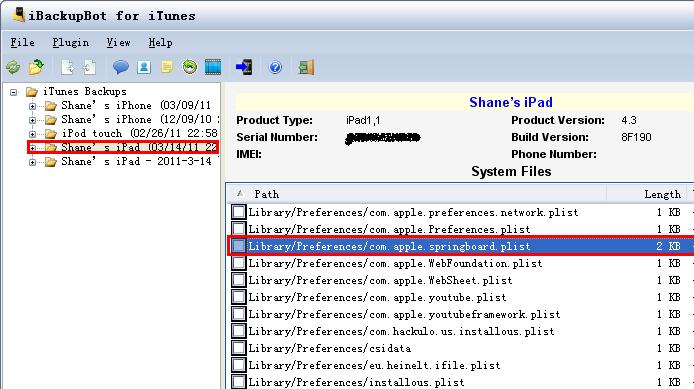
(oh ya jika muncul reg name dan reg code di cancel aja)
4. tambahkan 2 kalimat di bawah ini di bawah kata
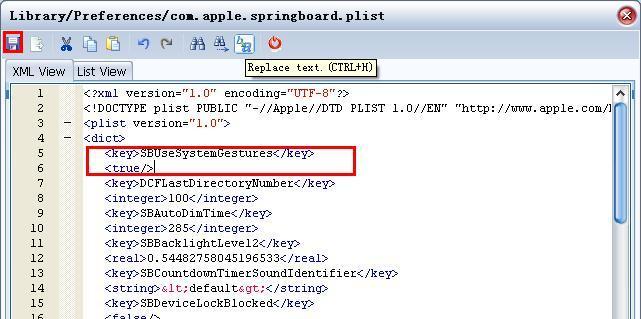
5. Klik save (Bentuk disk) dan matikan plist editor window
6. tekan CTRL+T, Akan muncul pop up “Do you really want restore this backup to your device?”, klik Yes.
7. setelah proses restore selesai, Ipad akan restart secara otomatis, kemudian silahkan menikmati multitouch gesture di iPadmu.
Dicoba saja. Kalau tidak percaya cek video ini
http://www.youtube.com/watch?v=uktPl...layer_embedded
Sumber: icopybot.com
Rabu, 27 April 2011
White iPhone 4 Fixed Proximity Sensor and Antenna Issues
The guys over iSpazio have made a usful videos regarding white iPhone 4 to test out a few of the areas of concern users have had with the black iPhone 4 devices, they tested both the proximity sensor performance and signal loss caused by "death grip" in black devices.

White Phone 4 exhibits excellent proximity sensor performance:
White iPhone 4 singal has been improved compared with black iPhone 4 :
Finally I have to say it looking that white iPhone 4 doing well than black iPhone 4, may be Apple has changed the material used in black devices. Thanks Apple
[via MacRumors]
White Phone 4 exhibits excellent proximity sensor performance:
the white iPhone 4 exhibits excellent proximity sensor performance, responding immediately to turn off the device's display when covered but then also keeping the display off until a finger or head is a "relatively large distance" away. The black iPhone 4s initially exhibited problems with displays coming back on while on phone calls, resulting in unintentional touch input. The issue was largely fixed in an iOS update, but it is reassuring to see that the white models exhibit solid performance from the get-go.
White iPhone 4 singal has been improved compared with black iPhone 4 :
iSpazio also tested the "death grip", attempting to generate signal loss by covering portions of the stainless steel band that serves as the antenna for the device. As with black iPhone 4s equipped with iOS versions released since Apple addressed early issues, the white iPhone 4 exhibits a slight drop in signal strength, but the drop does not appear to have a significant effect on connectivity.
Finally I have to say it looking that white iPhone 4 doing well than black iPhone 4, may be Apple has changed the material used in black devices. Thanks Apple
[via MacRumors]
Cellphones, Mobile Software Apple confirms it's working on a traffic service, moving away from Google Maps?

Apple iPad 2 to be available in 12 more countries this week including Japan, Hong Kong, Korea

Not content with two press releases, Apple has just announced that the iPad 2 will be hitting over 10 countries this week, starting with Japan on April 28th. On April 29th, the iPad 2 will be available for purchase in Hong Kong, India, Korea, Macau, Malaysia, Philippines, Singapore, South Africa, Turkey, and in the UAE . The iPad 2 with Wi-Fi will then be available in China starting on May 6th. Hit the break for Apple’s full press release.
iPad 2 Arrives in Japan, Hong Kong, Korea, Singapore & Eight Other Countries This Week
Wi-Fi Version Available in China on May 6
CUPERTINO, California—April 27, 2011—Apple® today announced that iPad® 2, the second-generation of its breakthrough post-PC device, will arrive in Japan on Thursday, April 28 and Hong Kong, Korea, Singapore and eight additional countries on Friday, April 29. iPad 2 will be available at Apple retail stores at 9 a.m. local time, select Apple Authorized Resellers, and online through the Apple Store® (www.apple.com) beginning at 1 a.m. Additionally, iPad 2 with Wi-Fi will be available in China beginning Friday, May 6.
iPad 2 features an entirely new design that is 33 percent thinner and up to 15 percent lighter than the original iPad, while maintaining the same stunning 9.7-inch LED-backlit LCD screen. iPad 2 features Apple’s new dual-core A5 processor for blazing fast performance and stunning graphics and now includes two cameras, a front-facing VGA camera for FaceTime® and Photo Booth®, and a rear-facing camera that captures 720p HD video, bringing the innovative FaceTime feature to iPad users for the first time. Though it is thinner, lighter, faster and packed with new features, iPad 2 still delivers up to 10 hours of battery life* that users have come to expect.
Pricing & Availability
iPad 2 with Wi-Fi will be available in Japan on April 28 and Hong Kong, India, Israel, Korea, Macau, Malaysia, Philippines, Singapore, South Africa, Turkey and UAE on April 29 for a suggested retail price of $499 (US) for the 16GB model, $599 (US) for the 32GB model and $699 (US) for the 64GB model. iPad 2 with Wi-Fi + 3G will be available for a suggested retail price of $629 (US) for the 16GB model, $729 (US) for the 32GB model and $829 (US) for the 64GB model. iPad 2 with Wi-Fi will be available in China on May 6, and further international availability will be announced at a later date.iMovie® and GarageBand® for iPad apps are available for $4.99 (US) each from the App Store℠ on iPad orwww.itunes.com/appstore. The Smart Cover is available in a range of colors in vibrant polyurethane for $39 (US) or rich leather for $69 (US).
*Battery life depends on device settings, usage and other factors. Actual results vary.
Apple announces launch of white iPhone 4

Apple on Wednesday finally announced that it will launch the white version of its popular iPhone 4 smartphone tomorrow, April 28th. Apple made it known earlier this year that the white model would finally launch this spring, though the company did not provide a firm release date until today. “The white iPhone 4 has finally arrived and it’s beautiful,” Apple’s SVP of Worldwide Product Marketing Phil Schiller said in a statement. “We appreciate everyone who has waited patiently while we’ve worked to get every detail right.” Specs and pricing for the white model line up exactly with existing models — $199 for the 16GB version and $299 for the 32GB version, both on contract, and the phones will be available online as well as at Apple Stores, AT&T stores, Verizon Wireless stores and select Apple retailers nationwide. Hit the break for the full press release.
White iPhone Arrives Tomorrow
CUPERTINO, California—April 27, 2011—Apple® today announced that the white iPhone® 4 will be available beginning tomorrow. White iPhone 4 models will be available from Apple’s online store (www.apple.com), at Apple’s retail stores, AT&T and Verizon Wireless stores and select Apple Authorized Resellers.
“The white iPhone 4 has finally arrived and it’s beautiful,” said Philip Schiller, Apple’s senior vice president of Worldwide Product Marketing. “We appreciate everyone who has waited patiently while we’ve worked to get every detail right.”
iPhone 4 is the most innovative phone in the world, featuring Apple’s stunning Retina™ display, the highest resolution display ever built into a phone resulting in super crisp text, images and video, and FaceTime®, which makes video calling a reality.
Pricing & Availability
White models of iPhone 4 will be available in Austria, Australia, Belgium, Canada, China, Czech Republic, Denmark, Finland, France, Germany, Hong Kong, Ireland, Italy, Japan, Luxembourg, Macau, Netherlands, New Zealand, Norway, Singapore, South Korea, Spain, Switzerland, Sweden, Taiwan, Thailand, UK and the US, beginning Thursday, April 28 and in many more countries around the world soon. White iPhone 4 will be available for a suggested retail price of $199 (US) for the 16GB model and $299 (US) for the 32GB model with a new two year agreement through the Apple Store® (www.apple.com), at Apple’s retail stores, AT&T and Verizon Wireless stores and select Apple Authorized Resellers.
Langganan:
Postingan (Atom)